

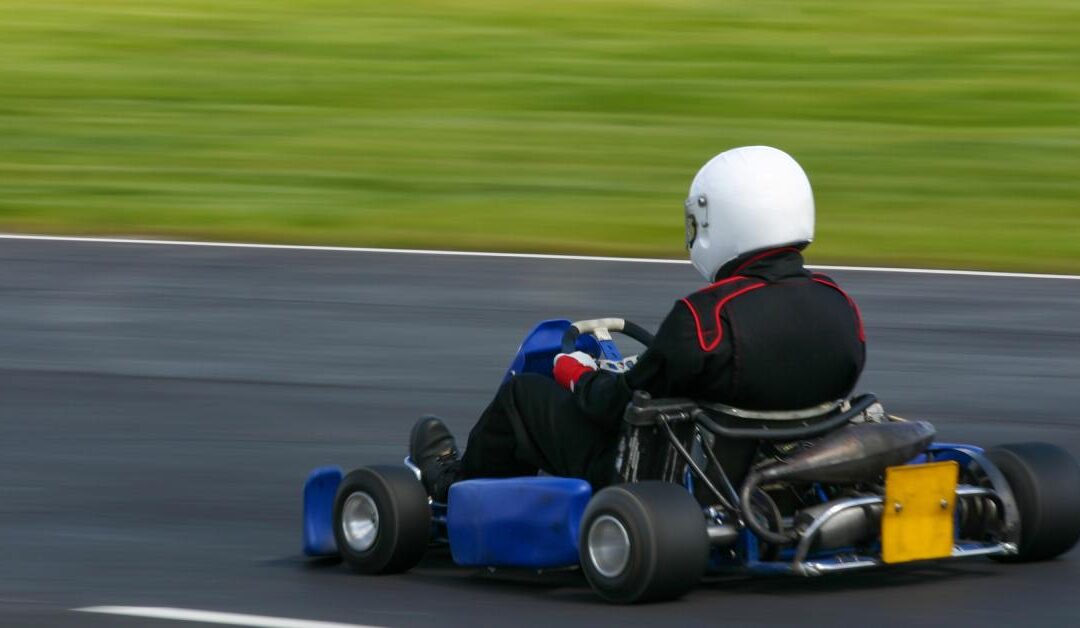
The engine roars to life beneath you, vibrating through the seat and into your spine. You grip the steering wheel, your heart pounding in time with the motor’s idle. The smell of gasoline and asphalt fills your helmet as you look down the long straightaway. Nothing compares to the raw, visceral experience of outdoor kart racing. Unlike indoor tracks with their electric karts and polished concrete, outdoor circuits offer the elements, higher speeds, and a true test of driving skill. You face wind resistance, changing track temperatures, and the intense thrill of maneuvering a high-performance machine just inches from the ground.
Stepping onto an outdoor track for the first time might feel intimidating, but that excitement fuels your performance. Every professional driver, from Formula 1 champions to endurance legends, started exactly where you sit right now. The transition from spectator to racer requires more than just a heavy right foot. It demands preparation, respect for the machine, and a willingness to learn the nuances of the asphalt. You can turn those initial nerves into laser focus and speed with the right approach. Follow these tips to help you prepare for your first outdoor kart race.
Gear Up for Speed and Safety
Before you ever set foot in a kart, you must prioritize your equipment. Safety gear acts as your armor on the track. While rental facilities like Speedsportz Racing Park provide the essentials, understanding what you wear helps you feel more comfortable and confident. A properly fitted helmet serves as the most critical piece of equipment. The helmet should feel snug around your cheeks and forehead so it stays in place as you navigate high-G turns. A loose helmet can slide over your eyes or rotate, distracting you when you need 100 percent visibility.
Beyond the helmet, clothing choice plays a massive role in your safety. You must wear closed-toe shoes. Sneakers with good grip let you feel the pedals accurately without your feet slipping during crucial braking or acceleration. Avoid loose clothing, scarves, or hoodies with strings that could flap in the wind or catch on moving parts. Many racers opt for long pants and a jacket to protect their skin from debris and wind burn, even on warmer days. Some facilities provide abrasion-resistant suits, which offer an extra layer of protection and make you feel like a pro. Gloves also aid significantly. They protect your hands from blisters and improve your grip on the steering wheel, which vibrates intensely at high speeds.
Get To Know Your Machine
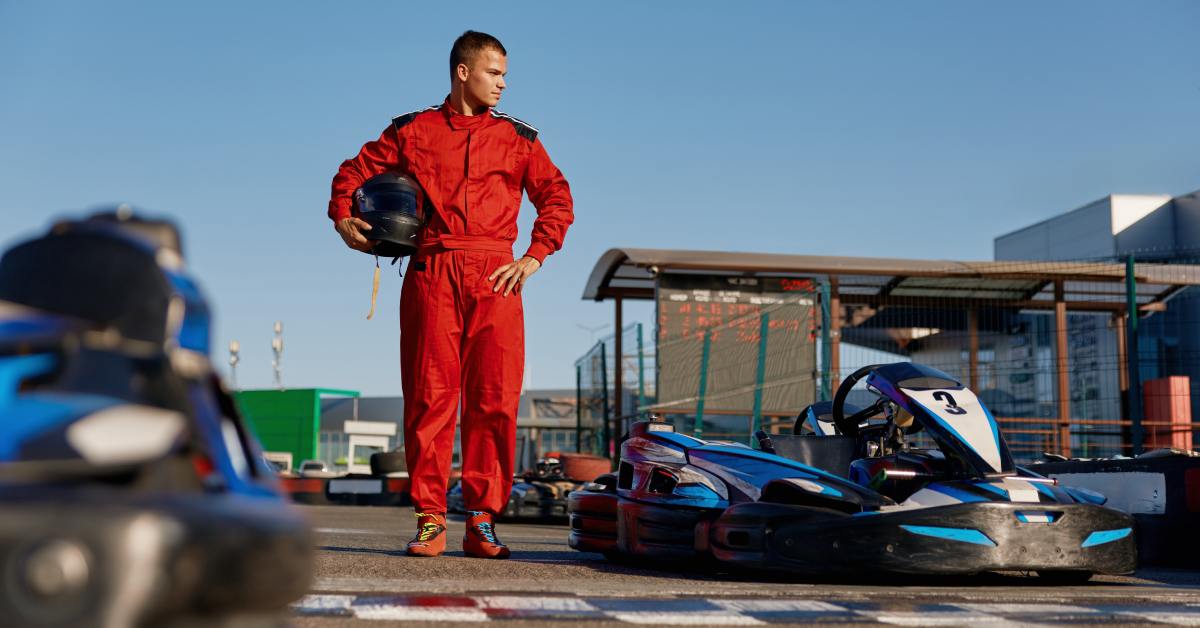
An outdoor go-kart functions differently from your daily commuter car. These machines rely on simplicity and direct mechanical feedback. You will not find power steering or suspension systems here. The steering connects directly to the wheels, meaning every bump in the track travels straight to your hands. You need a firm grip, but you should avoid strangling the wheel. A relaxed yet controlled grip lets you feel what the tires do on the asphalt.
The pedal layout also differs from that of a standard car. You operate the gas pedal with your right foot and the brake with your left. Beginners often struggle with this setup initially, but mastering left-foot braking unlocks faster lap times. You must avoid pressing both pedals simultaneously. Riding the brake while accelerating damages the kart and kills your momentum. Treat the pedals as precision instruments rather than on-off switches. Smooth inputs yield the best results. You want to roll onto the throttle and squeeze the brake rather than stomping on them. This smoothness keeps the kart balanced and prevents the tires from losing traction.
Master the Racing Line
Speed comes from efficiency, not just raw power. The fastest way around the track involves maintaining momentum, which you do by following the racing line. The racing line smooths out the corners, allowing you to carry maximum speed without sliding. Think of a corner in three parts: the entry, the apex, and the exit.
As you approach a turn, position your kart on the far outside edge of the track. This setup opens up the radius of the turn. Brake in a straight line before you turn the wheel. Braking while turning can cause the kart to spin because the weight shifts unpredictably. Once you’ve slowed sufficiently, turn toward the apex. The apex sits at the innermost point of the corner. You want to clip this point closely.
After hitting the apex, unwind the steering wheel and let the kart drift back to the outside edge of the track as you accelerate. This “outside-inside-outside” method utilizes the full width of the track and minimizes the severity of the turn. When you experience go-kart racing in Houston at a premier facility like Speedsportz, you will find wide, professional-grade tracks designed specifically to reward this technique. Hitting your marks consistently matters more than trying to drive fast in a messy line.
Respect the Rules and Flags
Outdoor tracks operate under strict safety protocols to keep everyone safe while driving at high speeds. Track marshals communicate with drivers using colored flags. Memorizing these flags before you race prevents confusion and penalties. The green flag signals the start of the race or a clear track, meaning you can accelerate to full speed. A yellow flag indicates caution. When you see yellow, you must slow down and hold your position because an incident has occurred ahead. Do not pass other drivers under a yellow flag.
A red flag means danger requires you to stop immediately. Bring your kart to a safe, controlled stop as directed by the marshals. The blue flag alerts you that a faster driver is approaching from behind and wants to overtake. If you see blue, maintain your line, but do not block the passing driver. Finally, the checkered flag waves to signify the end of the race. Slow down on your cool-down lap and head into the pit lane. Respecting these signals keeps the event fun and safe for all participants.
Prepare Your Body
Many first-time racers underestimate the physical toll of outdoor karting. The forces exerted on your body surprise most beginners. Without power steering, your arms, shoulders, and upper back work hard to turn the kart, especially through tight sections. The G-forces pull at your neck muscles in every corner. You do not need to be an Olympic athlete to race, but some light preparation helps.
Hydration remains key. Racing in a suit and helmet under the sun dehydrates you quickly. Drink plenty of water before you arrive at the track. Doing some light stretching before you jump in the kart can prevent cramping. Focus on your neck, wrists, and forearms. If you plan to race multiple heats, rest in the shade between sessions to replenish your energy. Fatigue leads to mental errors, and mental errors lead to spins or slow times.
Sharpen Your Focus
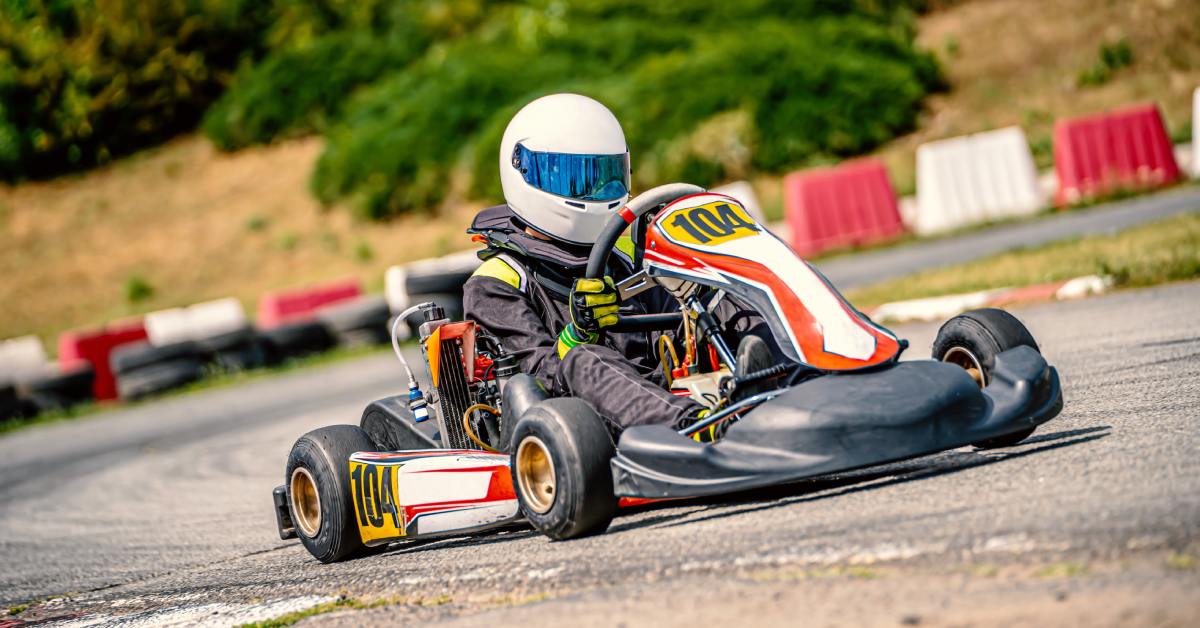
Racing challenges the mind as much as the body. You must maintain intense focus throughout the race. Beginners often make the mistake of looking directly at the front bumper of their kart or the bumper of the kart ahead. This error limits your reaction time. Instead, look as far down the track as possible. When entering a corner, your eyes should already scan for the exit.
Visualizing your path helps your brain process the speed. Looking ahead makes everything feel slower and gives you more time to react to other drivers or changes in the track surface. Patience also plays a huge role. You cannot win the race in the first corner, but you can certainly lose it there. Avoid aggressive moves early on. Focus on finding your rhythm and learning the track layout. As your confidence grows, your speed will naturally increase.
The Race Day Essentials
Packing the right items makes your day at the track much smoother. Bring a change of clothes for after the race. You might sweat more than you expect, and driving home in damp clothes feels uncomfortable. Sunscreen is a must for outdoor events, even on cloudy days. You will spend time waiting in the pit lane or watching others race, exposing you to the elements.
Verify you have a way to tie back long hair if necessary. Hair hanging loose can be a safety hazard and will likely obstruct your vision. If you have your own helmet, bring it, but check that it meets the track’s safety ratings. Most importantly, have a positive attitude. You are there to have fun and experience the thrill of speed.
Analyze and Improve
The learning continues after the checkered flag flies. Most tracks provide a printout of your lap times or display them on a monitor. Study this data. Look for consistency in your times. If one lap was significantly faster than the others, try to remember what you did differently. Did you brake later? Did you take a smoother line through a specific corner?
Ask the track staff or more experienced racers for tips. The karting community loves sharing knowledge. They might point out a specific bump in the track to avoid or a corner where you can carry more speed. Every race provides a lesson. Analyzing your performance helps you identify areas for improvement so you return to the track faster and smarter next time.
Start Your Engine
Outdoor karting offers an escape from the ordinary and a plunge into a world of speed, strategy, and excitement. You now possess the knowledge to step onto the grid with confidence. From mastering the racing line to understanding the critical safety flags, you have prepared yourself for the challenge. The only thing left to do is put that helmet on, press the gas pedal, and feel the rush for yourself.
Speedsportz Racing Park awaits your arrival. Our world-class facility offers the perfect environment for you to test your skills and experience the true power of outdoor karting. Whether you want to beat your friends or simply conquer the track, the green flag is waiting. Visit us in New Caney today and discover the racer within you!